
Play Therapy

What is Play Therapy?
In contrast to traditional “talk therapy”, play therapy uses play (the natural language of children) to provide a safe and supportive environment for children to express themselves and explore their thoughts and feelings. As a Registered Play Therapist™ through the Association of Play Therapy Jacy specializes in supporting children ages 3-12.

Play therapy can help children experiencing:
Anxiety, worry, or fear
ADHD or difficulty with attention and focus
Autism spectrum challenges
Anger or frustration management
Difficulty with social skills or peer relationships
Major life transitions, family changes, or trauma
Chronic/Terminal Illness
Grief and loss
Sensory processing difficulties
Low self esteem

What to Expect
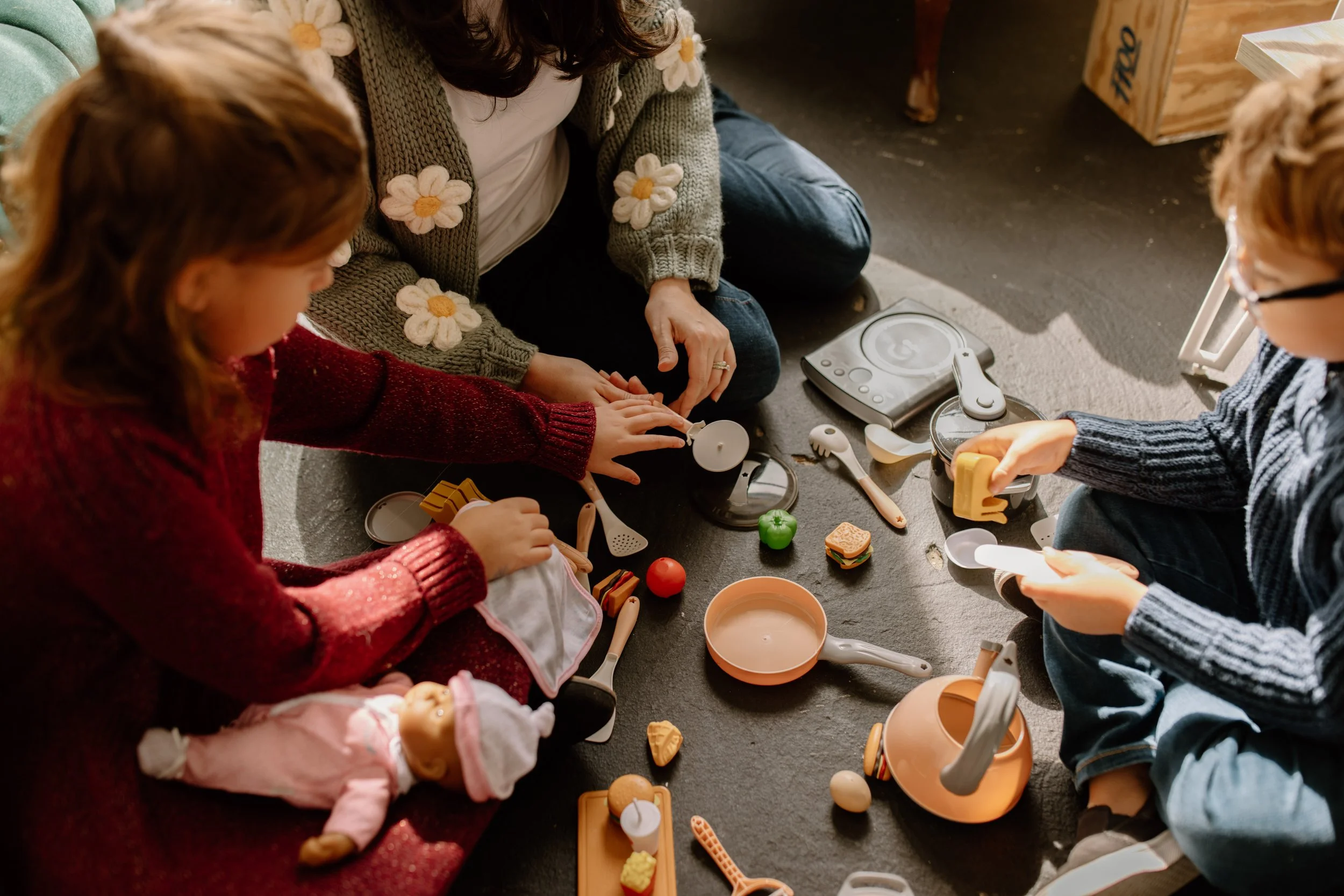
During play therapy sessions, children use toys, creative activities, and guided play to express thoughts and feelings that might be hard to put into words. Sessions are child-led, with gentle guidance from a Registered Play Therapist™ who provides support, insight, and coping strategies. Over time, children gain confidence, emotional regulation skills, and a sense of empowerment.
Parent consultations are scheduled every 4-6 sessions or as needed to provide psychoeducation and tailored support for parents to help your family outside of session.

Benefits of Play Therapy
-
Play therapy helps children express themselves and communicate their feelings and emotions in a safe and non-threatening environment. Through play, children can act out scenarios and express their thoughts and feelings in ways that may be difficult to articulate verbally.
-
Play therapy fosters a sense of mastery and control in children, which can help them feel more confident and self-assured. Through play, children can explore their own abilities and strengths, and develop a sense of competence in their abilities.
-
Play therapy helps children learn new coping skills and strategies for dealing with stress, anxiety, and other difficult emotions. Through play, children can practice problem-solving, decision-making, and emotional regulation skills in a safe and supportive environment.
-
Play therapy encourages children to use their imaginations and creativity to explore new ideas and possibilities. Through play, children can develop their creativity, problem-solving skills, and ability to think outside of the box.
-
Play therapy can help children improve their social skills and develop positive relationships with others. Through play, children can practice social skills such as sharing, taking turns, and cooperation, which can help them build stronger relationships with peers and adults.